
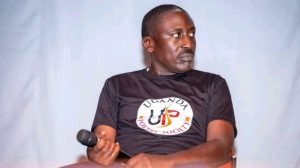
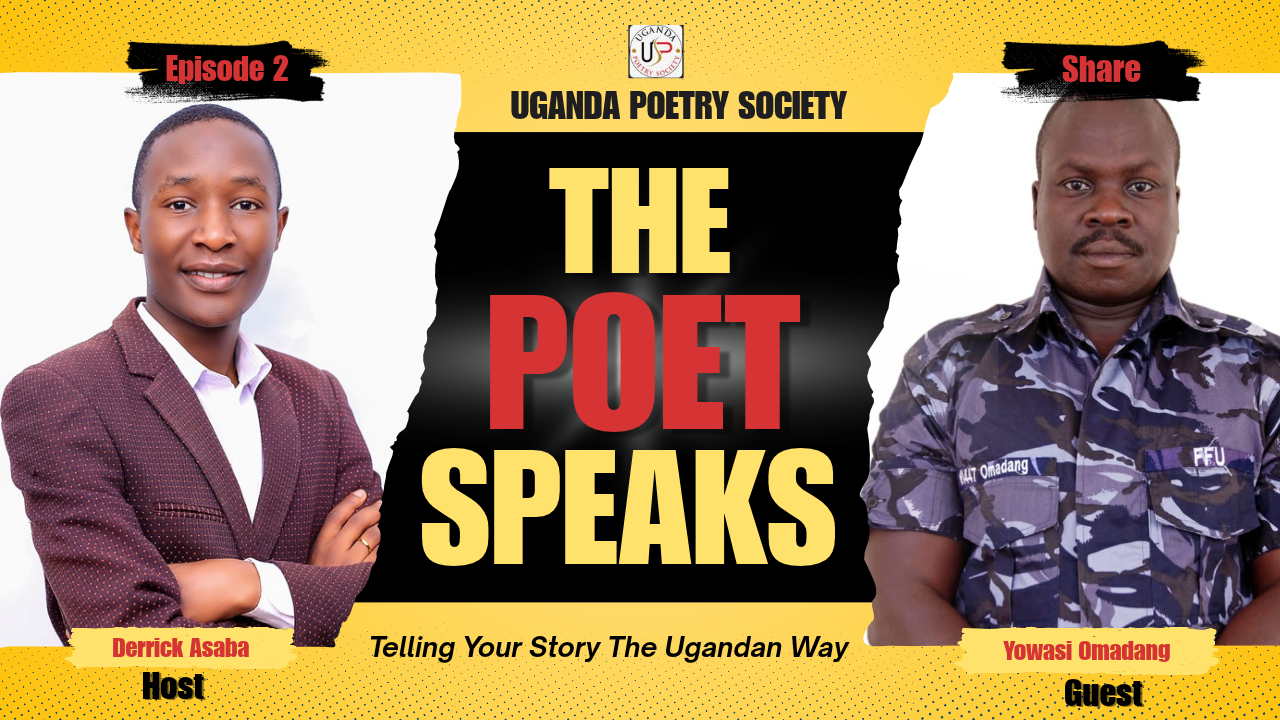
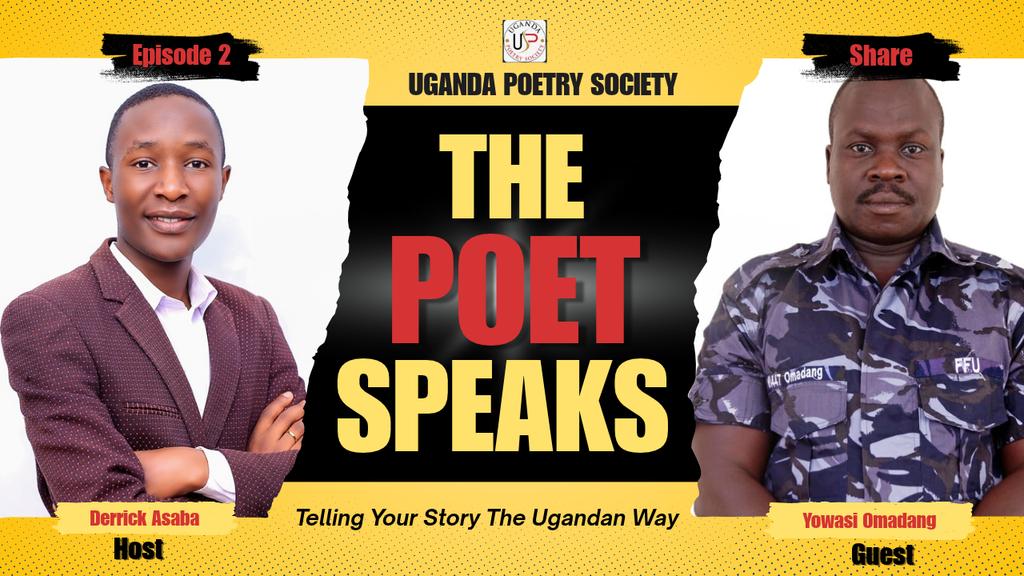
Welcome back to The Poet Speaks! We are thrilled to bring you the second episode of our series, where we dive deep into the hearts and minds of the brilliant creative voices shaping our literary landscape. The Uganda Poetry Society is dedicated to giving words a stage, celebrating expression without boundaries, and connecting powerful local voices to the world. In this episode, your host Derrick Asaba sits down with the incredible poet Yowasi Omadang to explore his creative journey, the inspiration behind his verses, and what it truly means to write and perform in Uganda and beyond today.
Asaba: Hello, Omadang, here we are. Let’s get it started.
Omadang: Yeah. Sure.
Asaba: How have you been? How is life treating you?
Omadang: Not so well, not so bad. 50/50.
Asaba: That’s too precise. How best would you break down the ’50/50′ status?
Omadang: (laughing) Well, life is dynamic generally. That’s why they say “it’s full of ups and downs.” One time you feel better health-wise and financially; another time you are losing everything. So, life isn’t a 100% assurance.
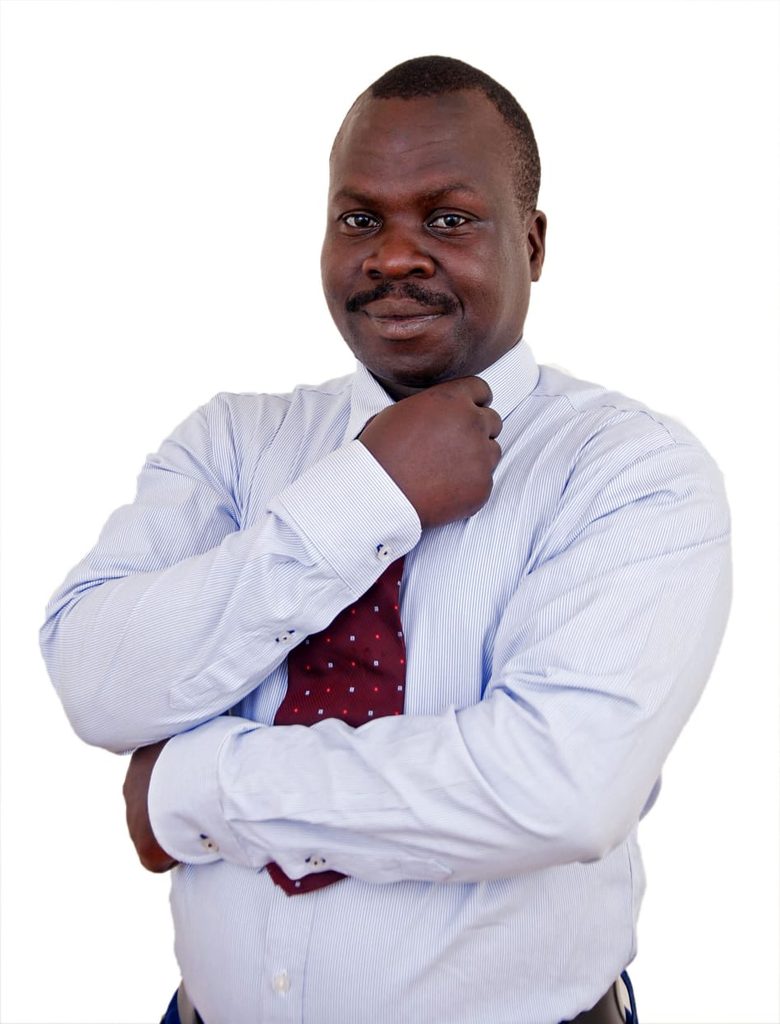
Asaba: I get you there. Well, at least I have met and shared a word with you. Unlike me, perhaps, someone reading this conversation might not know who you are. Could you let them in on who you are in detail, sir?
Omadang: People see me from different angles! Perhaps these are all the traits I don’t know. My literary journey has been shaping me lately in how I view people, the surroundings, and events around me. Some people think I’m harsh, while some think I’m cold, yet some find me funny!
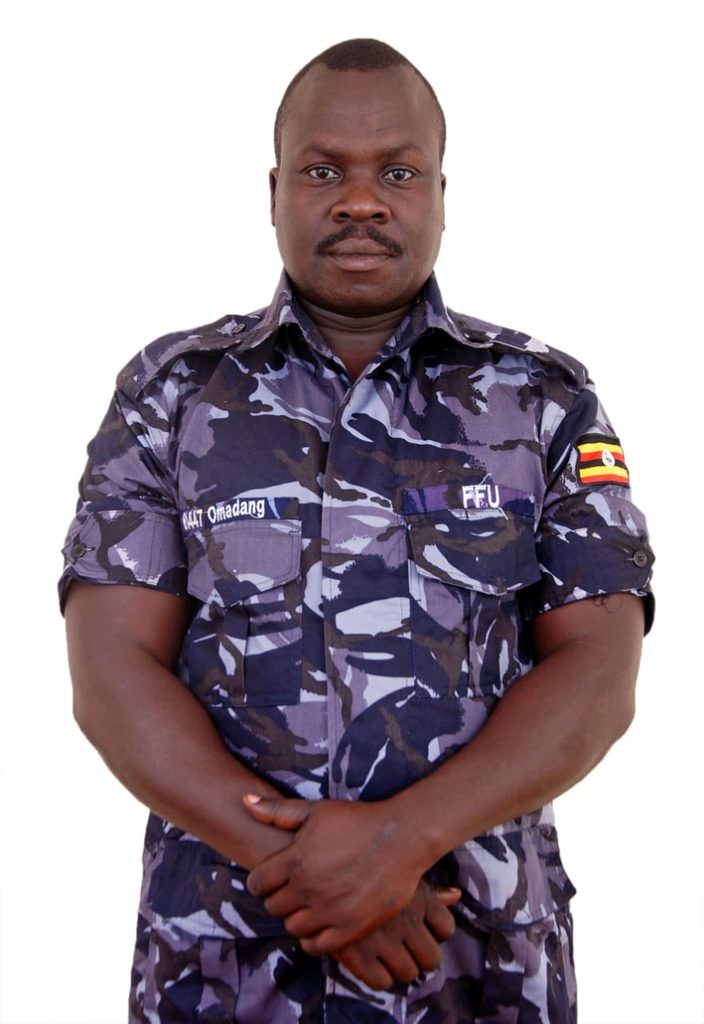
I am a Ugandan police officer, writer, poet and author of two books, Tour of Duty: A Handbook of Modern Policing (2026) and War Ulcers (2024). My love for writing stems from my love for reading, though it is limited by the demanding nature of policing in Uganda.
My work has appeared in magazines like Writers Space Africa (WSA), Ghana Writes, Fasihi, Nalubaale Review and anthologies like Corpses of Unity: The International Bilingual Anthology On The War in Cameroon, Best New African Poets Anthology 2019, Writing Robotics: Africa Vs Asia and elsewhere. I was also longlisted for the Pan African Writers Association, PAWA Poetry Prize 2026.
Asaba: But of all traits, why would they think of you as ‘harsh’? Before I delve in the literary side, please take us through your education to date.
Omadang: I seem to be harsh because I’m a good listener, and I make decisions quietly in my head. By the time I react, you’ll not have gotten a chance to know what I’ve been thinking.
I really have little to say about my education. I went through normal primary school and secondary school, and my education journey ended in high school. I hold no tertiary education transcript, having opted to join the Police with the minimum qualification the recruitment team needed.
Asaba: I can see the result of quiet decisions. You don’t even want us to know your former primary school. But on a serious note, your OB would be reading this and blushing. By withholding the name, you will deny them that ‘one minute of happiness’. So, will you?
Omadang: On a lighter note, because I’m ashamed of not having gone far with education. Well, I started primary school in ’98. I think we are the pioneers of Universal Primary Education, and that was at Kirugu Church of Uganda Primary School, formerly in Mukono District, now in Buikwe. My parents were teaching here. Then I went to Kisiki College, Namutumba, for Ordinary Level before proceeding to Nkuutu Memorial Secondary School, formerly in Iganga District, now in Bugweri.
Asaba: You don’t know what you have done to the OB/OG fraternity. Small or big steps, they are worth honouring. This leads me to my next question: was it at Kirugu that the poet in you was born, or somewhere later in the Police?
Omadang: Kirugu didn’t do much in shaping the poet in me. Of course, with the poem recitals I could do on speech days at school, I couldn’t even think about being a poet because I didn’t know it in the first place. My father could read Song of Lawino by Okot p’Bitek, and his favourite poem was My Husband’s Tongue Is Bitter. Somehow, my mother made me first hate poetry because she prevented us from reading Song of Lawino, saying it’s vulgar. The poet in me took form in my Advanced level when I was offered Literature in English as a subject, without having offered it at my ordinary level. This is where I came to understand what language does with rhythm and sound effects.
Asaba: Oh! Your mother wanted us to never ‘know’ you… We have forgiven her already. Taking you back in time, do you remember your first poem? What was it about?
Omadang: I forgave her too, and she’s now my best fan! Yeah, I do remember my first poem. I don’t think I’ll ever forget it, even in death.
My first poem was titled ‘THE BABY’. I wrote it in 2010 around March but didn’t put my signature on the paper. I took it to the Literature class, “pretending” to have done research and found it. It was a nice discussion about the poem, and one girl at the time, Stella, dissected it thoroughly, as if she had been with the writer. I kept it up to date.
The Baby uses comparison to highlight similar characteristics of women and babies when they happen to see something they want. The pretence, mood swings, false tears everything!
Asaba: Ha! You’re pushing me to ask you this: what usually inspires your poetry? I see ‘THE BABY’ was something else… Tell us more.
Omadang: I’m inspired by one character trait within me, and I can assure anyone out there that it’s the only character I know about myself. Being taciturn. This takes us back to being referred to as “harsh.” I really speak less, and the little I speak comes slowly, almost word by word! Whenever I try to speak fast, I stammer.
Going back to what inspires me to write poetry, being taciturn makes me overthink or do the talking in my head. I create situations, solutions and drafts all in my mind, then attempt to put them down.
I recall very well that when I wrote The Baby, I first asked myself why babies cry even when you are feeding them, and this comparison to women; I hope it has opened every reader’s mind into the gutter. It’s lately that policing challenges are inspiring me. Stories in the field are worth writing down.
Asaba: At least I am leaving this interview with a new word: taciturn. I think I was taciturn until my true self showed up with unpaid bills. You are not one of those kinds who are inspired by other writers? Just wondering…
Omadang: Other writers have come along the way. I believe a writer inspired by other writers may, with time, fall into the trap of copying someone’s voice.
I can’t say I’m inspired by so-and-so; we see things differently and analyse them differently. Finally, the expression is totally different (the voice). I will say I have loved some individual poets’ expressions, but that doesn’t inspire me. Poets like Dennis Brutus, Kaoberdiano Dambara, Koffi Awoonoor, Henry Barlow, Okot p’Bitek, Samuel Taylor Coleridge, Emily Dickinson and Oscar Wilde.
Asaba: I get your statement. Writing poetry for years, dating back to the days while in your Advanced level of education, is a whole room of experiences. When did the idea of putting those poems into a book start? In this case, War Ulcers. Take us there.
Omadang: I used to think that when you write a piece of work, it somehow grows its own wings and goes out flying, but I was wrong. Things are different; the reality is too real. I used to write and keep, either for fun or with the mindset I just mentioned. I didn’t have any idea of collecting my poems into a book till I joined Writers Space Africa (WSA). I used to ask its founder, Anthony Onugba alias Penboss, about the same, and his answer shocked me. He just told me that “the very poems WSA has published can be collected and arranged into a book.” I wasn’t convinced till one WSA member from WSA-Kenya, Benny Wanjohi, published his first collection, which had the very poems WSA had published.
That’s how my mind opened. I looked for all the poems I had written and collected them in a manuscript, and indeed it resembled a book, but I didn’t find a title till I went to Kasese on my tour of duty. War Ulcers was conceived in Kasese, and the book cover is my own imagination.
Asaba: Great roots right there. Thanks to Penboss and Wanjohi for ‘mind-opening’ you. Still about War Ulcers, you only gave us how the idea was birthed but not in its entirety. Were you starving in times of war? Was it an illness? Help me clarify this before my assumptions suffocate me.
Omadang: War Ulcers is metaphorically used for “effects of war.” I wouldn’t want to delve much into that because we all know what war is capable of bringing or doing. War is multidimensional. Every side registers a win and a loss. Whatever war ulcers you have experienced, that was the dose of the ulcers.
Asaba: Poets! So, you left us in space like that. Anyway, I have read this collection, and I must say it’s truly well-put. What do you ever want the reader to stay with after reading your book?
Omadang: The poems in War Ulcers are mostly about the common problems which come as “ulcers” You’ll realise most poems are situational. A situation is created, but judgement is left for the reader. Thinking about what you have just read makes you fall in love with that piece of writing or makes you want to go back and read to find out exactly what the writer’s intentions were in that particular subject.
I don’t use jargon, but I use simple words with abstract meanings. Every reader should know that not every simple situation is normal, as it is in War Ulcers.
Asaba: We live in an era where AI can instantly generate convincing syntax, yet poetry demands a deeply human stillness and lived experience. In a world saturated with machine-made text, how do you keep your mind intact as a poet?
Omadang: Temptation is caused by untamed curiosity. I know the capabilities of AI, and I can’t lead myself into that temptation of writing soulless poems. I still write in my notebook. I use the phone’s Notes app when I’m far from my notebook. This has kept me within my limits, and above all, I don’t ask AI to write for me because it doesn’t know what I see, go through or know.
Asaba: Though you haven’t mentioned this during this interview, I know you as a poetry editor. How has that experience influenced the way you perceive and write poetry?
Omadang: I’m a lenient editor, in short. I take my voice too seriously, and I often guard it jealously. So, editing poetry has made me realise every poet’s voice must be reserved and expression protected.
I have realised poetry flows or imitates an individual poet’s natural speech, so heavy editing alters that, and it’s not good. Where and who sells authenticity and expression? You realise it’s all within us.
Asaba: On this, I believe you have interacted with several poetry pieces from across. What are some of the specifics that you have found commendable and areas of improvement among poets? I know there may be many, but just the basic ones.
Omadang: Oh, I came across a poem by a Zambian poet, and I have never got over the rhythm. It’s not only in Zambia, but even in Nigeria and here too.
Poets are no longer trying to write poetry but they’re just doing it. They’re employing real poetic devices, and they’re emphasising their places in various literary canons.
Poetic devices add flavour to a poem, and without them, a poem is a random rant.
Asaba: This needs more emphasis. How about the things that are ditching us as poets? Or do you only announce good news?
Omadang: Poets are humans, and they go through what other people go through. Before you hit that line, be calm and wait patiently for that time. Comparison is ditching us poets, and it’s chasing many poets out of the family. Growth is gradual.
Asaba: Tell us about your new book before we sign out…
Omadang: Tour of Duty: A Handbook of Modern Policing, is a book about policing topics, challenges and etiquette.
It’s a collection of poems about citizens’ perception of the police as an institution and its officers. The book was published in February 2026 but hasn’t gained the recognition it deserves within the force; I’m hopeful that soon it’ll be available in police libraries in the training schools. Anyone will read the book, not necessarily cops only.
Asaba: Tell me it’s poetry, too.
Omadang: Yeah. It’s police poetry.
Asaba: I actually thought it was another form of writing. Where can we get this book from at the time?
Omadang: I haven’t tried another genre of writing, but maybe sometime I’ll try out something new.
The book is not yet out for commercial print. It’s still going through approval with the Force’s PRO and other hierarchies. I can only say: a little more patience.
Asaba: We shall be patient. I have reached at a time when I can’t ask much more except for this: if you are to be remembered, what will that be for?
Omadang: I think I’m setting up something that will remain with people for ages. The cop who wrote and edited books without a university transcript.
Asaba: Do you want us to continue with the interview? No! Thank you so much for your time, ‘the cop who writes and edits books without a university transcript’. What a statement!